
Quick Answer
To clean a marble mandir at home: wipe daily with a dry microfiber cloth, do a weekly wipe with lukewarm water, and do a monthly deep clean using a few drops of mild pH neutral soap in water. Always dry immediately after any wet cleaning. Never use vinegar, lemon, Harpic, Lizol, Colin, or any acid-based cleaner as they permanently etch and damage natural marble.
What You Need
Supplies You Need to Clean a Marble Mandir
You do not need expensive products. Most of what you need is already at home. The key is using soft, non-abrasive tools and pH neutral liquids only.
Soft microfiber cloths (2 to 3)
Lukewarm water
Mild pH neutral dish soap
Soft bristle toothbrush
Baking soda (for stains)
Marble polish (quarterly use)
Expert tip: Always use two cloths. One damp cloth for cleaning and one completely dry cloth for immediate drying. Never let water sit on marble, even for a few minutes, as it leaves water marks and mineral deposits over time.
Step by Step
Complete Step by Step Cleaning Method
There are four levels of marble mandir cleaning based on frequency. Follow all four consistently and your mandir will never need professional restoration.
1
DailyDry Dusting and Ash Removal
Use a dry, soft microfiber cloth to gently wipe the entire surface of your marble mandir every day. This removes:
- Incense (agarbatti) ash that settles on flat surfaces
- Dried flower petals and leaf debris from daily puja
- Dust particles that cause micro scratches if left on marble
- Dried splash marks from diyas or puja water
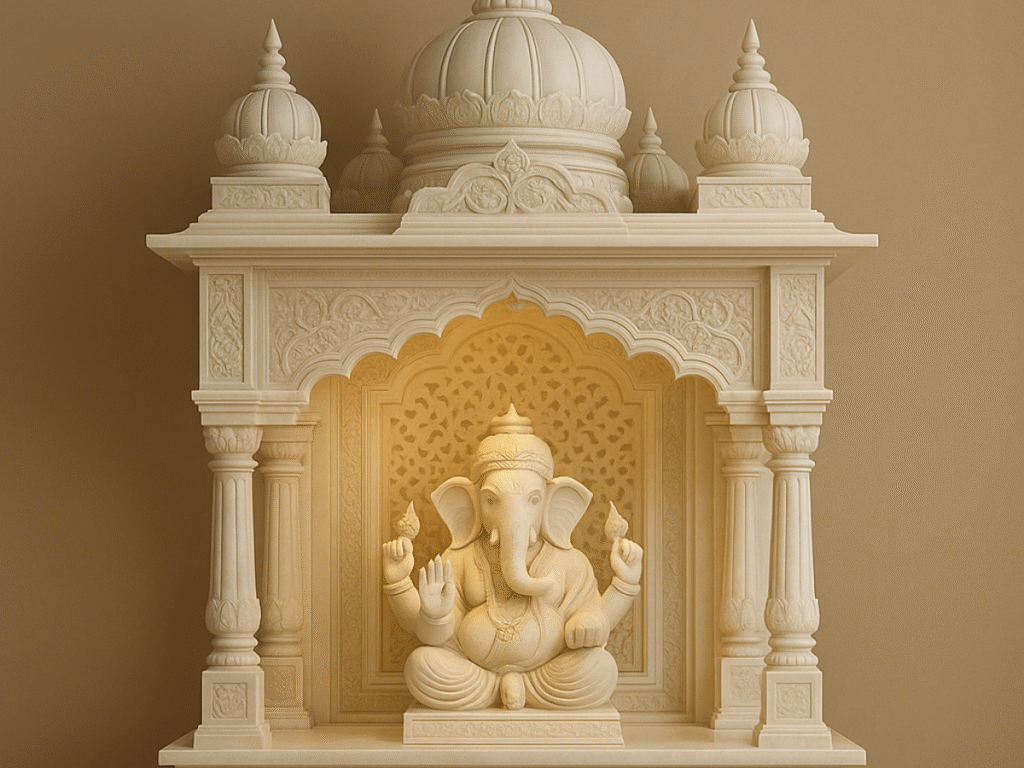
Work from top to bottom. Start with the shikhar (dome top), move to the pillars, then the base platform. Never use a paper towel or rough cloth for this step as both cause fine scratches on polished Makrana marble.
2
WeeklyDamp Wipe Down with Lukewarm Water
Once a week, do a proper wipe down with water to remove residues that dry dusting cannot catch.
- Dampen a microfiber cloth with plain lukewarm water. Do not soak it, just make it damp.
- Wipe the entire surface in gentle circular motions.
- Pay extra attention to the puja platform area where kumkum, sindoor, or oil may have touched the marble.
- Immediately follow with a second completely dry cloth to dry every section you have cleaned.
The most important rule: Never let water sit on marble. Dry immediately after every wet cleaning step.
3
MonthlyDeep Clean with Mild Soap Solution
Once a month, do a thorough deep clean to remove stubborn residue buildup from incense smoke, oil lamps, and regular use.
- Fill a small bowl with lukewarm water and add 2 to 3 drops of mild dish soap (Vim or Pril). The water should barely foam.
- Dip a microfiber cloth, wring it well so it is only damp, and clean the flat surfaces.
- For carved sections, use a soft toothbrush dipped in the same soap solution. Gently brush into the grooves, pillars, and jali work.
- Rinse the cloth in clean water, wring well, and remove all soap residue.
- Dry thoroughly, then let the mandir air dry for 20 to 30 minutes before placing puja items back.
4
Every 3 to 4 MonthsPolishing to Restore Original Shine
Over time, even perfectly maintained marble loses a small amount of luster. Polishing restores this shine.
- Ensure the mandir is completely clean and dry before polishing.
- Apply a marble-specific polish using a soft cloth.
- Work in small circular motions across flat surfaces only.
- Buff gently with a clean dry cloth until the surface feels smooth and looks glossy.
- Do not apply polish inside carved grooves or jali sections.
If your mandir is made of pure Makrana White Marble, a good polish will restore the original bright white, almost mirror-like finish.
Our Makrana Marble Mandirs
Stain Guide
How to Remove Common Stains from a Marble Mandir
Different stains require different treatments. Acting quickly is always better than letting a stain set. Here is a complete guide for all types of marks that commonly appear on a marble mandir used for daily puja.
| Stain Type | How to Remove | Difficulty | Time |
|---|---|---|---|
| Diya oil or ghee | Baking soda paste + plastic wrap, 20 to 30 minutes, then wipe gently with damp cloth and dry. | Medium | 30 to 45 min |
| Kumkum or sindoor | Blot immediately (do not rub). Clean with damp cloth and mild soap. Dry fully. Old kumkum may leave faint pink tinge. | Medium | 15 to 20 min |
| Incense ash residue | Dry dust first. Then wipe with damp cloth in circular motions. Use monthly deep clean with mild soap for grey film. | Easy | 10 min |
| Turmeric (haldi) | Blot with dry cloth. Apply 3% hydrogen peroxide on stain, leave 5 minutes, wipe clean and dry. Test in hidden area first. | Hard | 10 to 15 min |
| Water marks or rings | Buff with dry microfiber cloth. For stubborn marks, use marble polish applied in circular motions. | Easy | 10 min |
| Milk or panchamrit | Wipe immediately with a damp cloth. Clean with mild soap solution and dry thoroughly. Never allow milk to dry on marble. | Easy | 10 min |
| Incense smoke yellowing | Requires professional marble polishing. Marble polish can reduce mild yellowing. Severe cases need a stone restoration specialist. | Hard | Professional |
Important: For any stain, always blot, never rub. Rubbing spreads the stain and pushes it deeper into the porous marble. Work from the outer edge of the stain inward toward the center.
What to Avoid
Products to Never Use on a Marble Mandir
This is the most important section in this entire guide. More mandirs are damaged by wrong cleaning products than by anything else. The following are extremely popular household cleaners that are permanently damaging to natural marble.
Never Use These Products on Marble
- Vinegar (sirka): Highly acidic. Etches marble on contact. Creates dull, rough, permanently damaged patches.
- Lemon juice: Also acidic. Same effect as vinegar. Even brief contact causes etching on Makrana marble.
- Harpic or toilet cleaners: Extremely acidic. Will dissolve the surface of marble within seconds of contact.
- Lizol or Dettol floor cleaners: Contain acids and disinfectants that react badly with calcium carbonate in marble.
- Colin (glass cleaner): Contains alcohol and ammonia. Strips the polish and dulls the finish of marble permanently.
- Bleach (sodium hypochlorite): Can cause permanent discoloration and yellowing in white Makrana marble.
- Abrasive scrubbers: Steel wool, rough sponges, or scrub pads permanently scratch the polished surface.
- Paper towels or dry broom: Both cause micro scratches over time. Always use soft microfiber cloth only.
Natural marble is primarily composed of calcium carbonate (CaCO3). Any acidic substance reacts with calcium carbonate, dissolving the surface in a process called etching. The damage looks like a dull, slightly rough patch where the stone once had a mirror shine. Unlike scratches, etching cannot be fixed with polishing alone. It requires professional grinding and re-polishing.
Schedule
Marble Mandir Maintenance Schedule
Use this simple schedule to keep your marble mandir in perfect condition year-round without spending much time or money.
🌅
Daily
Dry microfiber wipe. Remove ash, petals, dust. 2 to 3 minutes.
📅
Weekly
Damp wipe with lukewarm water. Dry immediately. 5 to 10 minutes.
🧼
Monthly
Deep clean with mild soap solution. Include carved sections. 15 to 20 minutes.
✨
Quarterly
Apply marble polish. Restore luster. 20 to 30 minutes.
🏠
Annually
Professional inspection. Check for cracks or discoloration.
Special Care
How to Clean Carved Sections and Jali Work
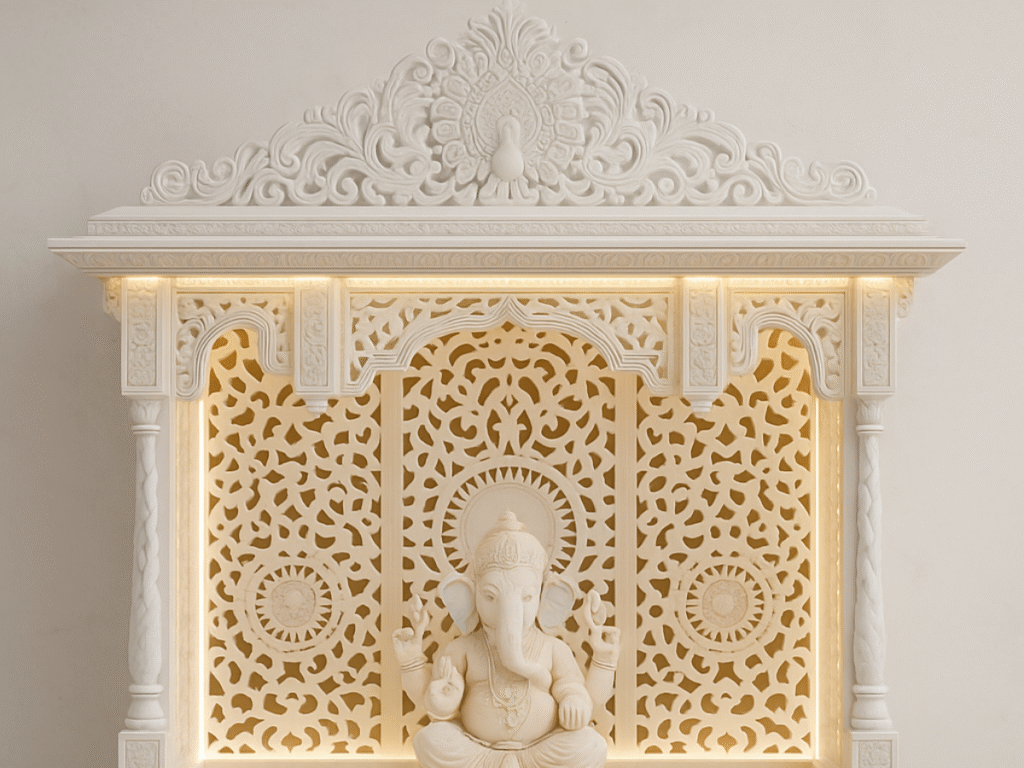
The most beautiful feature of a handcrafted marble mandir is also its most delicate part. The intricate jali (lattice) work, floral carvings, and column detailing trap dust, ash, and incense residue in their grooves.
Cleaning Carved Grooves and Pillars
Use a soft bristle toothbrush. Dip it in your mild soap solution (lukewarm water with 1 to 2 drops of soap). Brush gently in the direction of the carving pattern. Rinse with a clean damp cloth and dry thoroughly.
Cleaning Jali (Lattice) Work
Work systematically from one side to the other. After brushing, use a thin damp cloth or squeeze some water through the jali openings and let it drain naturally. Dry with a cloth on both sides. Never use compressed air or a blower as this can push dust deeper into the stone.
Cleaning the Shikhar (Temple Dome)
The dome collects the most dust. Use a dry microfiber cloth daily. For monthly deep cleaning, a soft watercolor paintbrush (size 10 or 12) works better than a toothbrush as its longer, softer bristles reach more delicate carvings without any risk of scratching.
From our artisans in Kishangarh: At our workshop, we clean freshly carved mandirs using only clean water and fine-hair brushes before final polishing. Even during manufacturing, we avoid any chemical contact with the stone. Simple tools, gentle technique, and consistency outperform any commercial cleaner.
Shop Mandirs with Intricate Carving Work
Frequently Asked Questions
No. Vinegar is acidic and will etch the surface of marble permanently. Even a single application can dull the shine and create rough patches on Makrana marble. This type of damage cannot be reversed with regular cleaning or polishing. Always use a pH neutral cleaner or plain lukewarm water.
Daily light dusting is recommended to remove ash and flower residue. A proper damp wipe with water should be done once a week. Deep cleaning with a mild soap solution should be done monthly. Polishing is recommended every 3 to 4 months to maintain the original shine.
The safest cleaner for a marble mandir is plain lukewarm water with a microfiber cloth. For slightly tougher cleaning, a pH neutral stone cleaner or 1 to 2 drops of mild dish soap such as Pril or Vim in water works well. Avoid all acid-based, bleach-based, or abrasive cleaners completely.
Make a paste of baking soda and water. Apply it gently over the oil stain. Cover with plastic wrap and leave for 20 to 30 minutes. Then wipe gently with a damp cloth and dry immediately. Repeat the process if needed. Never rub the stain aggressively as this pushes oil deeper into the porous stone.
Never. Harpic, Lizol, Colin, and similar household cleaners contain acids and harsh chemicals that will permanently damage marble. They strip the polish, cause yellowing, and etch the stone surface. These products are safe for ceramic tiles and glass but are highly harmful to natural marble.
Use a soft bristle toothbrush dipped in lukewarm water with a tiny drop of mild soap. Gently brush into carved sections, jali work, and pillars. Rinse with clean water using a damp cloth. Dry immediately. A soft watercolor paintbrush works even better for delicate shikhara carvings.
Yellowing in marble is usually caused by iron oxidation in the stone reacting with moisture, or by using wrong cleaners such as acids or bleach. It can also be caused by long-term exposure to incense smoke. Mild yellowing can be improved with marble-specific polish. Severe yellowing requires a professional marble polisher.
Yes, rose water and gangajal are safe for marble as they are near neutral in pH. However, do not let them sit on the surface for long periods. Wipe and dry the surface after use to prevent water marks or mineral deposits from building up over time.
Crafted With Stone, Kishangarh
Looking for a Marble Mandir That Lasts a Lifetime?
Our Makrana White Marble mandirs are handcrafted by master artisans in Kishangarh, Rajasthan. Direct from factory. Pan-India delivery with full insurance.
More Guides You Will Find Useful
Care Guide
Marble Mandir Maintenance Guide
Long-term care tips to keep your mandir in perfect condition for decades.
Read more Buying GuideMakrana vs Vietnam vs Italian Marble
Detailed comparison of all three marble types used for home temples.
Read more Vastu GuideBest Positions and Materials for a Mandir
Expert vastu guidance on where to place your mandir and which stone to choose.
Read more Design IdeasSmall Marble Mandir Designs for Flats
Top 10 compact mandir designs that fit in apartments and small homes.
Read more Design GuideMarble Temple Designs for Modern Homes
Contemporary marble temple styles for modern Indian home interiors.
Read more Buying GuideHow to Choose the Perfect Marble Mandir
Everything you need to know before buying a marble mandir for your home.
Read more